News from the frontier of AI forecasting
FORAXION, the company behind The Forecasting Machine, pushes the limits of actionable foresight.
Results for “EY”
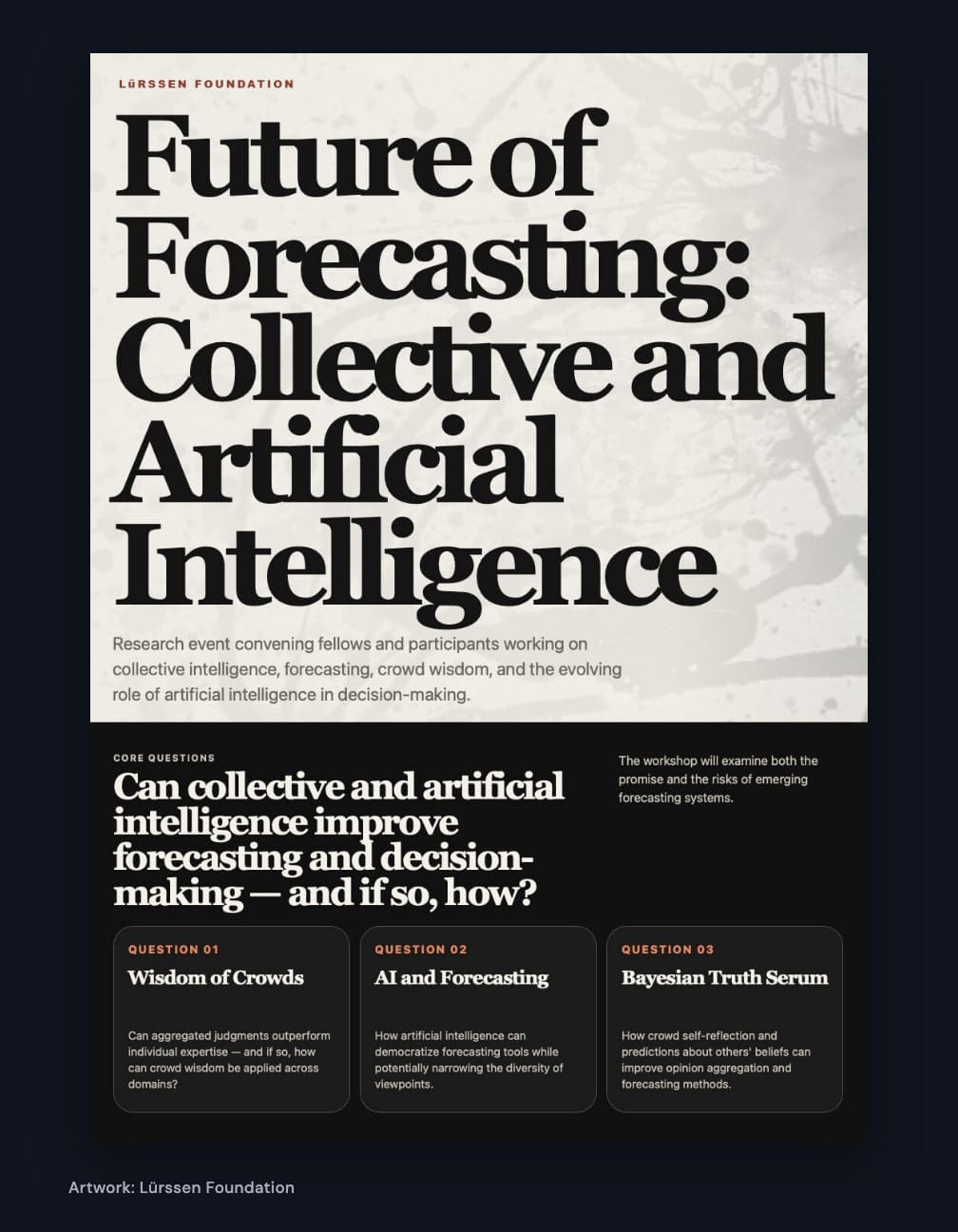
Four lessons from 25 years of crowd forecasting: Servan-Schreiber at the Lürssen Foundation workshop
At a workshop convened by MIT’s Dražen Prelec in Rijeka on 1–2 October 2026, Émile Servan-Schreiber was scheduled to present four lessons on money, Brier scores, the Bayesian Truth Serum and AI forecasting.
“Those markets are killed forever”: Servan-Schreiber on insider trading and the truth-machine problem
In an interview with Compliance+More on 15 September 2026, Émile Servan-Schreiber argued that suspected insider trading damages the product itself, not just compliance. It drives informed traders out of real-money prediction markets, and play money removes the incentive to rig outcomes.
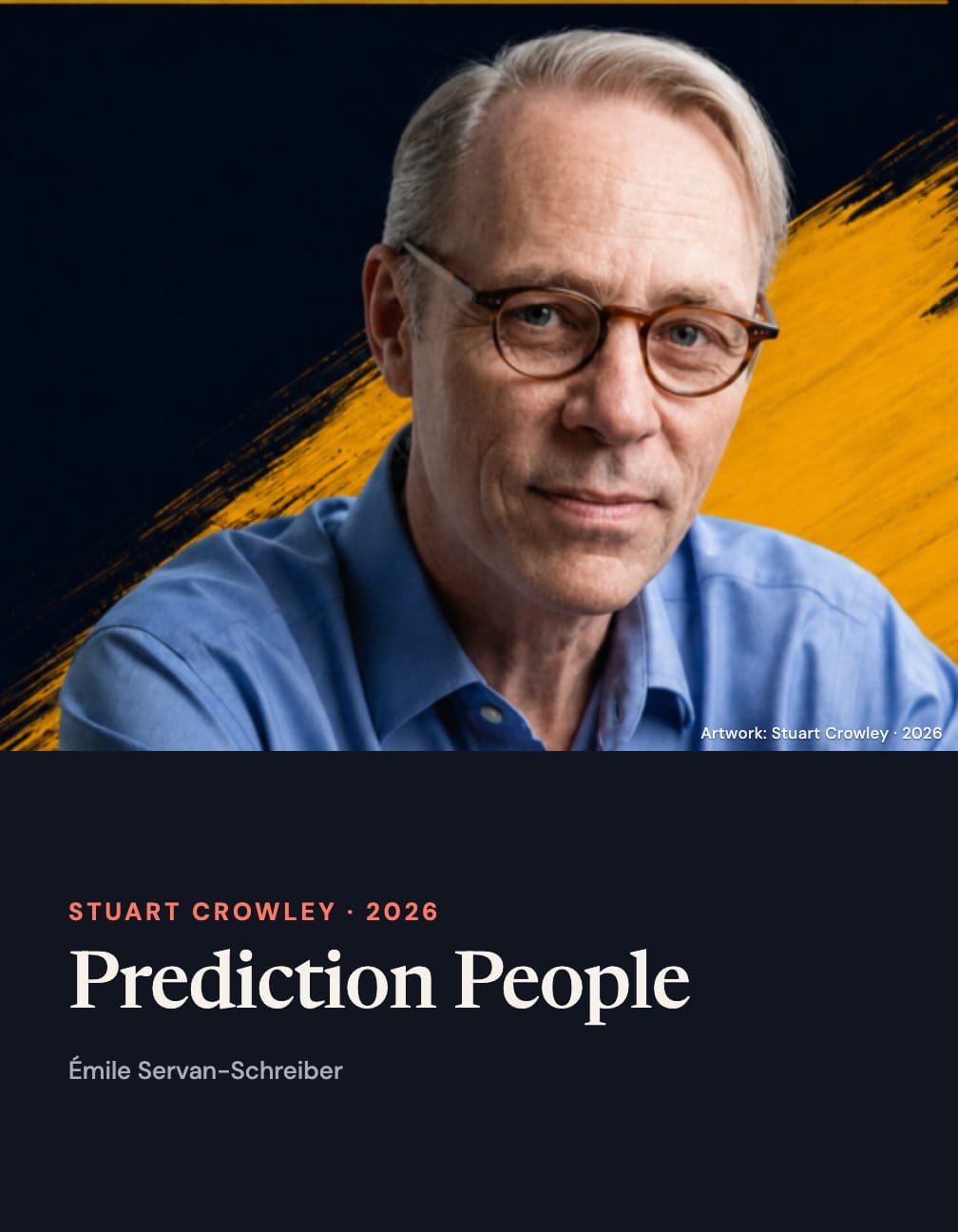
“Prediction People”: Servan-Schreiber on why money builds the business but not the forecast
In Stuart Crowley’s “Prediction People” interview, published on 24 August 2026, Émile Servan-Schreiber separated the forecasting mechanism from the business model. He also talked about forecasters who have kept playing for 25 years, AI competing with his own product, and why governments should use crowd forecasts.
A 2017 field guide to prediction markets for foresight, reread in 2026
Futuribles International has made Émile Servan-Schreiber’s 14-page toolbox on prediction markets free to download. Written in 2017 for foresight practitioners, its practical rules still hold, and its list of research frontiers reads differently now that AI forecasting exists.
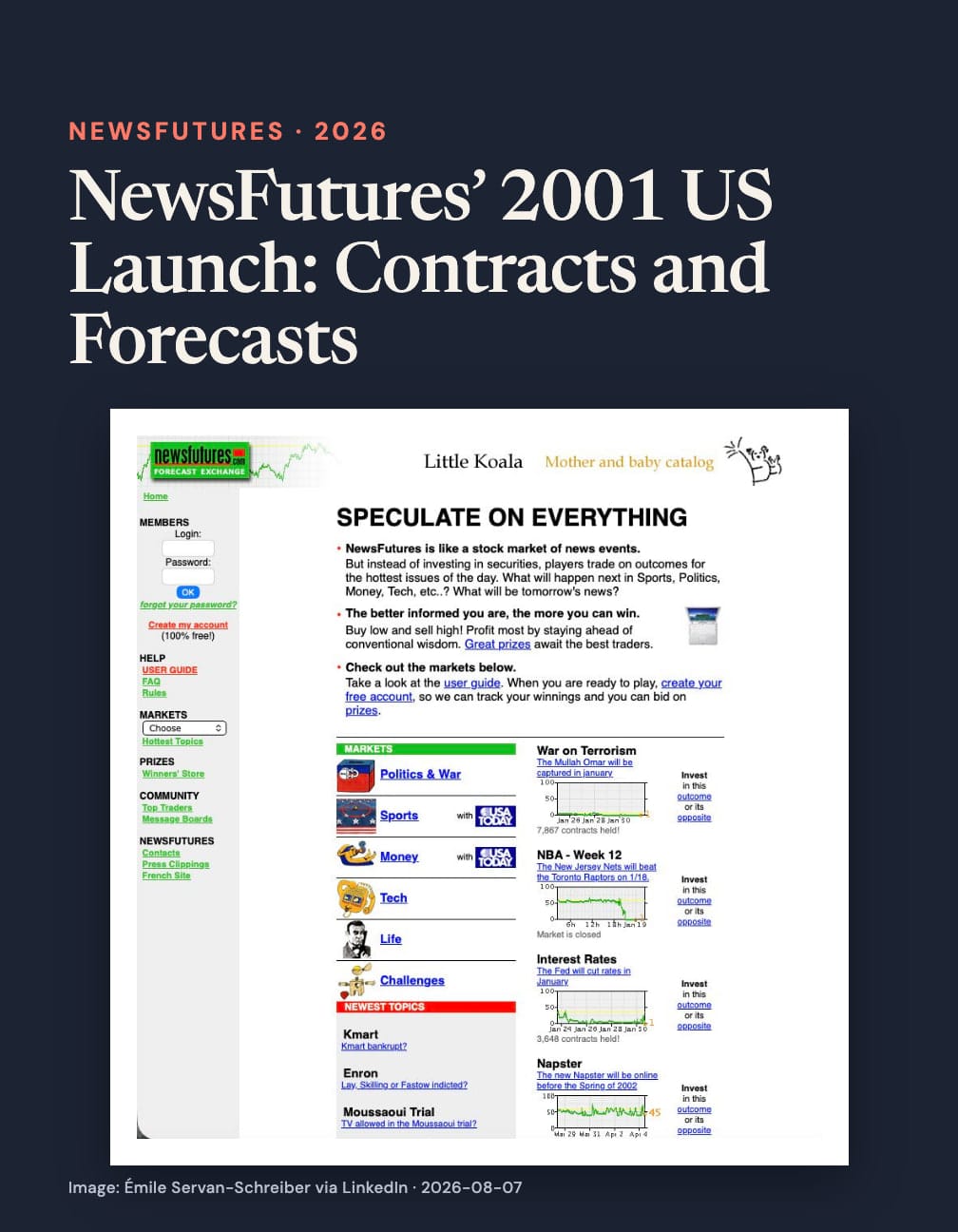
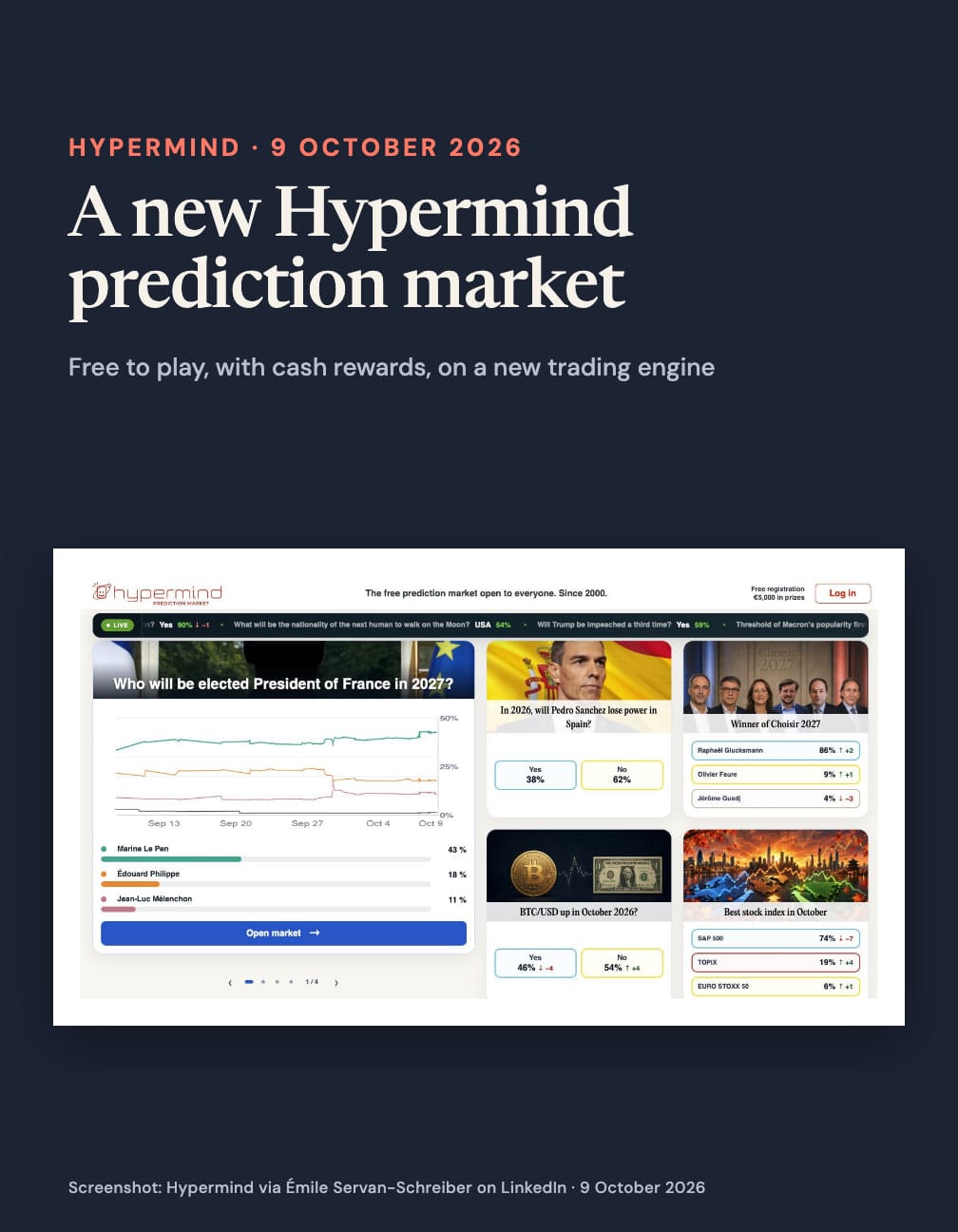
Play money, same ballpark: Hypermind’s 12-year accuracy benchmark against Polymarket and Kalshi
Hypermind published the data from 1,141 play-money markets resolved since 2014 and compared them with Polymarket and Kalshi. The report concludes the three are at parity, and an independent commentator agreed that parity, not victory, is the defensible reading.
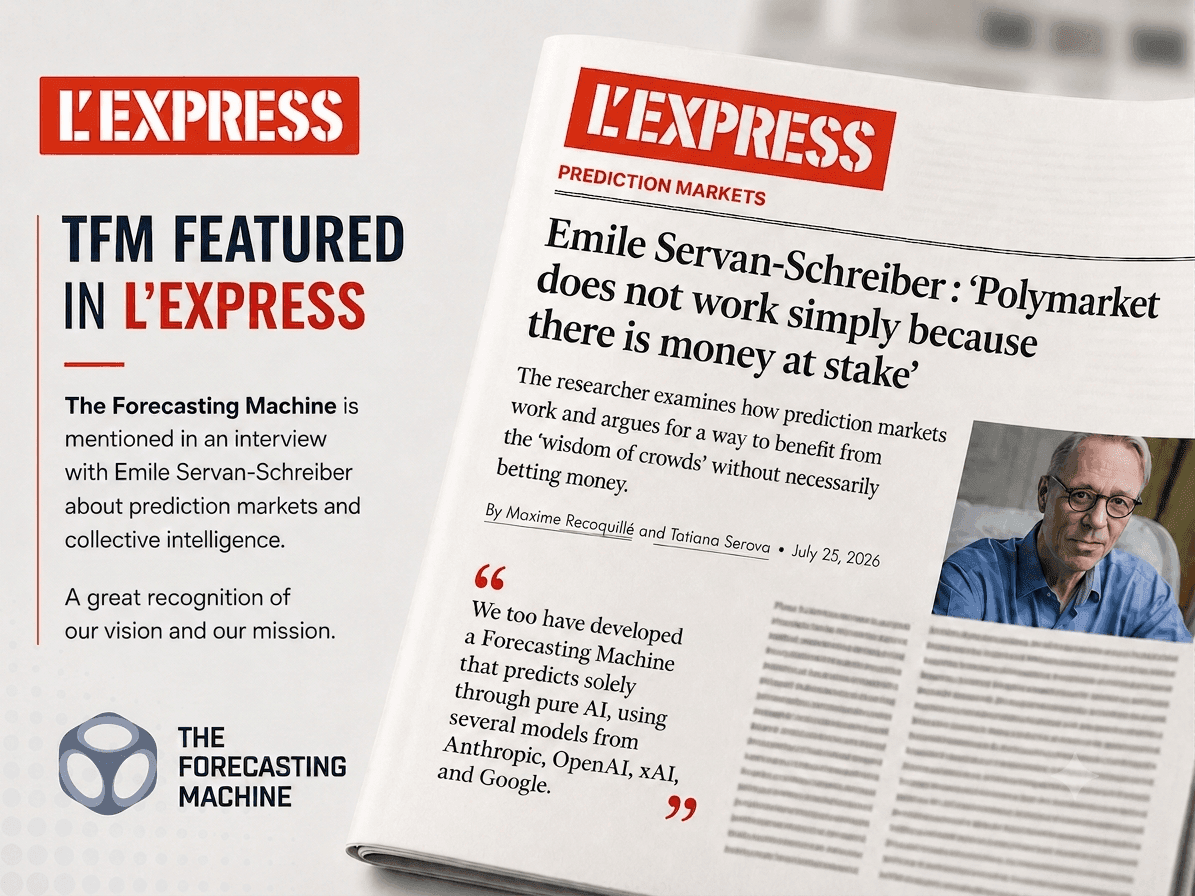
L’Express Interviews Émile Servan-Schreiber on Polymarket and Money-Free Forecasting
Days after France blocked Polymarket, L’Express interviewed Émile Servan-Schreiber, who argues that cash wagering is not what makes a crowd forecast accurate—and who described The Forecasting Machine’s all-AI system to the paper.
Prediction markets can work without money on the line: Servan-Schreiber in Bloomberg Opinion
In a Bloomberg Opinion essay on 8 July 2026, Émile Servan-Schreiber revisited a 2003 wager with Justin Wolfers over French and California wine. The bet became a study showing that play-money and real-money markets forecast American football equally well, and he argued that design, not money, drives accuracy.
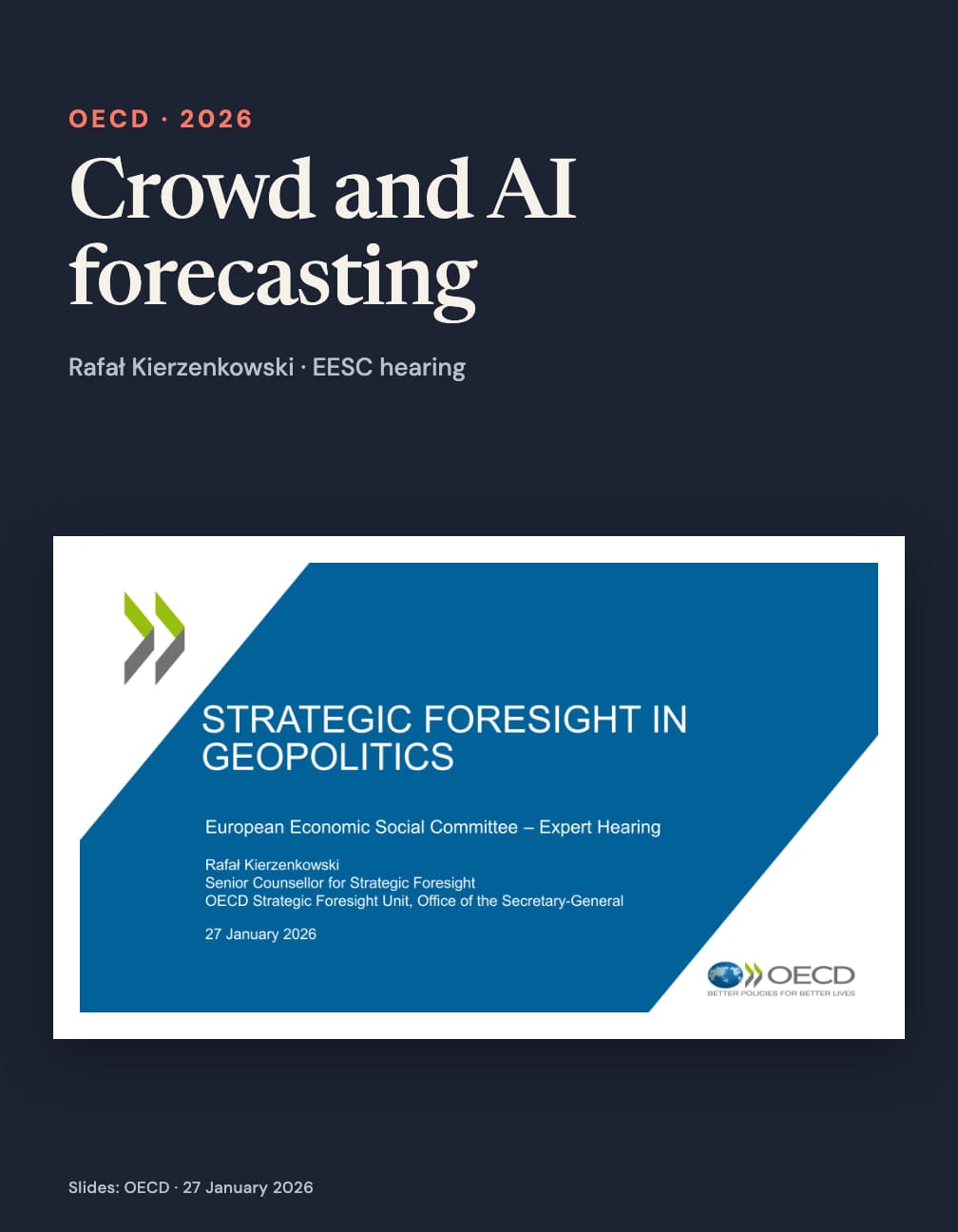
How the OECD’s foresight unit fits crowd and AI forecasting into policy planning
From a Paris meeting of government foresight teams in October 2025 to an EU expert hearing in January 2026, the OECD’s Strategic Foresight Unit has set out where Glimt and The Forecasting Machine fit, and where they don’t.
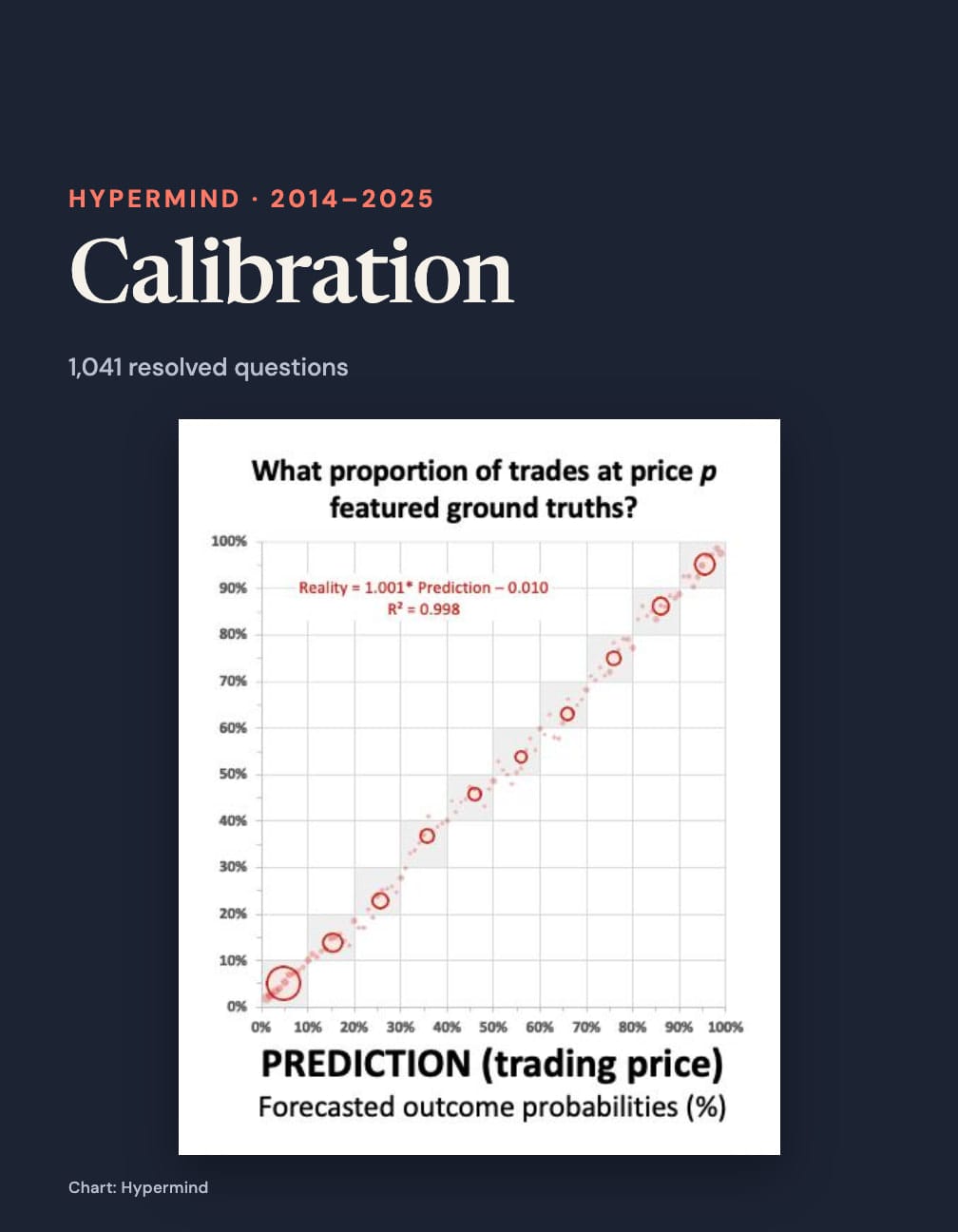
Eleven and a half years of Hypermind forecasts: does a 70% price come true 70% of the time?
Émile Servan-Schreiber recomputed the calibration of the Hypermind prediction market over 1,041 questions resolved from 2014 to the end of 2025. Here is what calibration means and how the result compares with earlier snapshots.
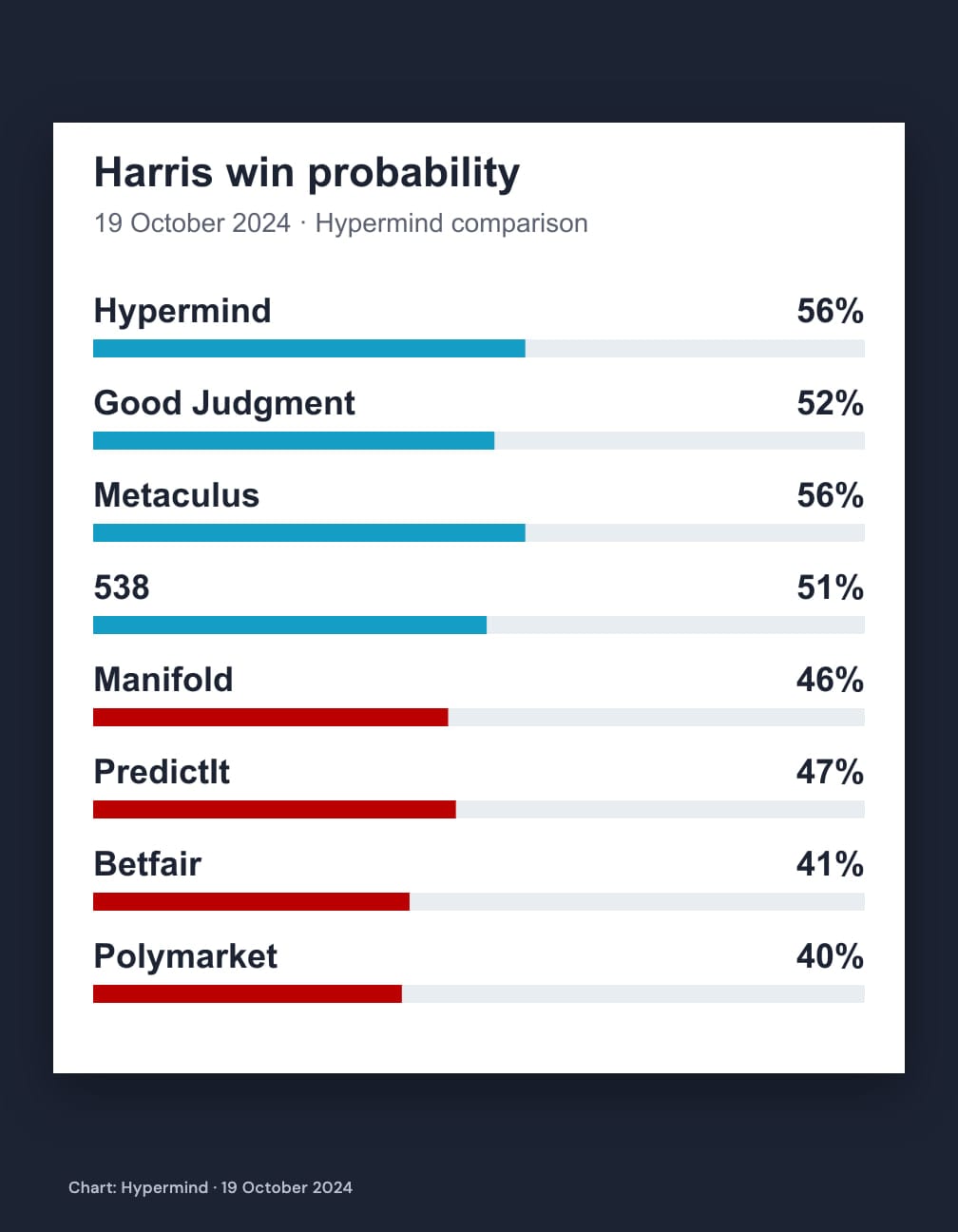
Red bars and blue bars: how betting markets and forecaster panels split over Harris and Trump
In the final weeks of the 2024 US election, Émile Servan-Schreiber tracked eleven forecasting venues. Real-money markets leaned Trump, forecaster panels leaned Harris, and the result reopened an old argument about what money adds to a forecast.