FORAXION TIMESOCTOBER 2026

INSIGHTS

IDEAS, METHODS, AND TECHNOLOGY SHAPING BETTER FORECASTING AND STRATEGIC DECISIONS.

Insights

Latest in Insights

2026-10-02The Forecasting Machine

Prediction Markets Explained: How to Read Polymarket Odds

What a prediction-market price means, why the resolution rules matter, and how to use Polymarket odds as evidence without mistaking them for certainty.

2026-10-02The Forecasting Machine

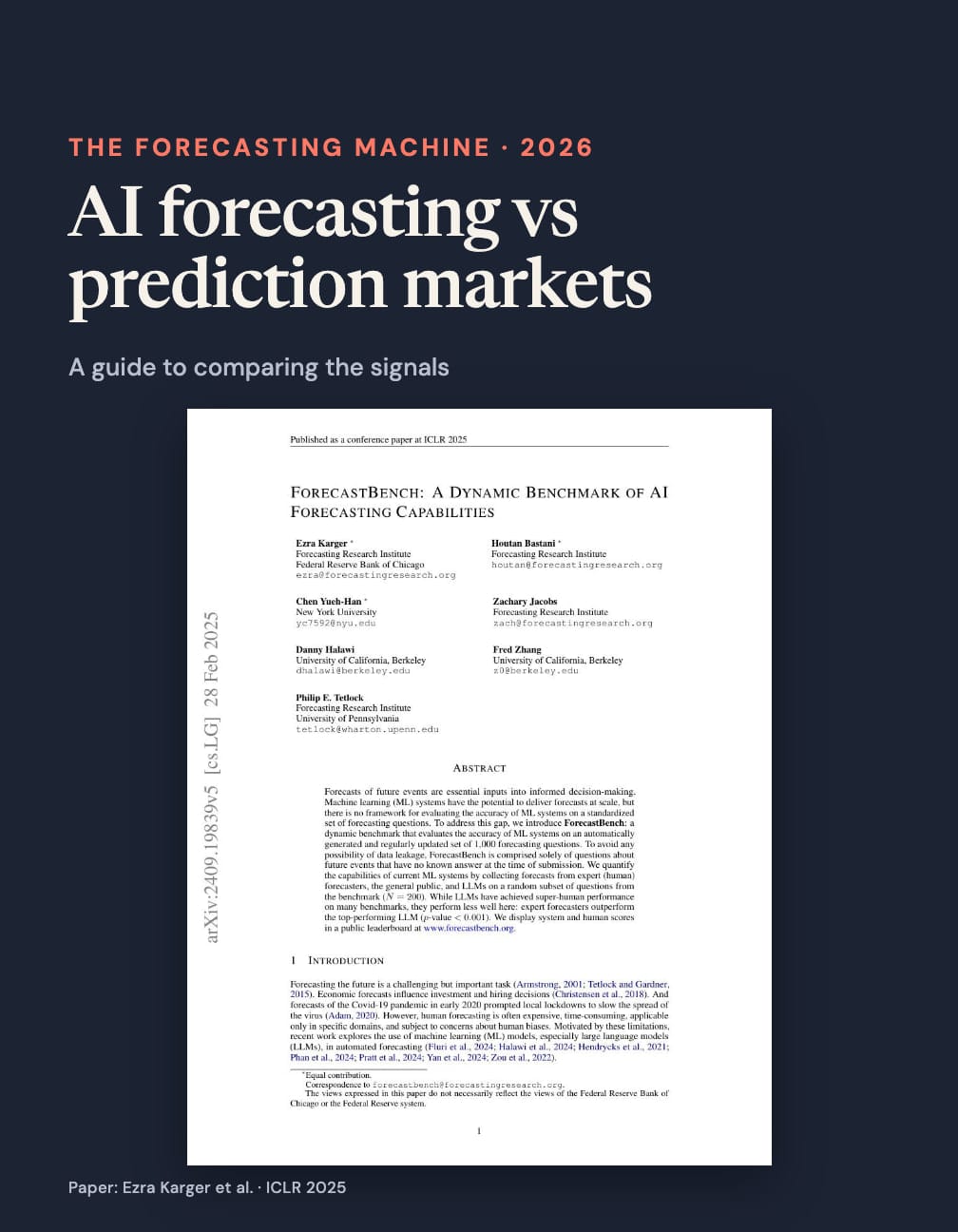
AI Forecasting vs Prediction Markets: How to Compare the Signals

Compare AI forecasts, Polymarket prices and human crowds on the same question, deadline and evidence cutoff. A practical guide to disagreement, evaluation and decision use.

2026-10-02The Forecasting Machine

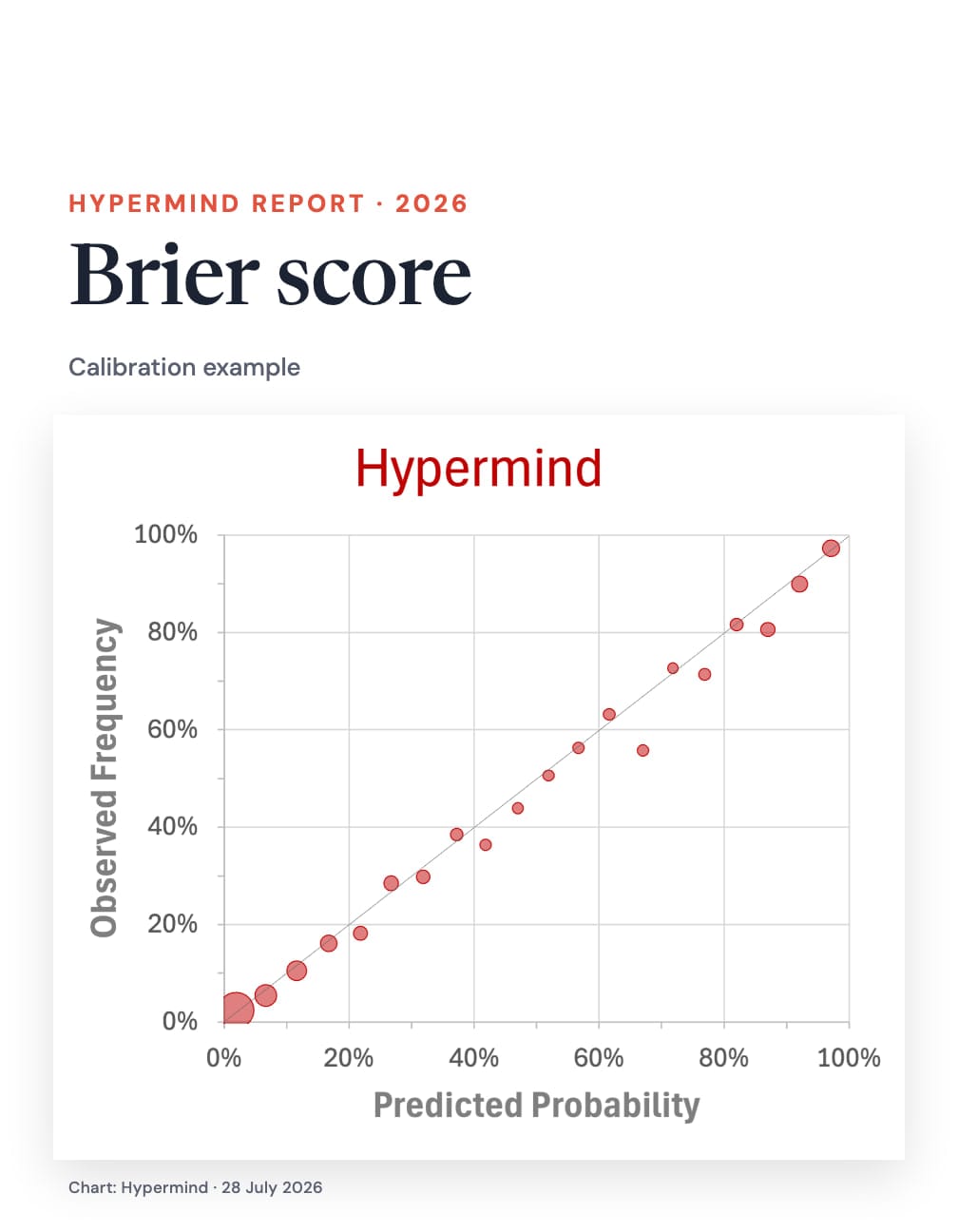
Brier Score and Calibration: How to Measure Forecast Accuracy

Calculate a binary Brier score with worked examples, distinguish calibration from accuracy, and compare AI forecasts and prediction markets fairly.

2026-08-22The Forecasting Machine

A 2017 field guide to prediction markets for foresight, reread in 2026

Futuribles International has made Émile Servan-Schreiber’s 14-page toolbox on prediction markets free to download. Written in 2017 for foresight practitioners, its practical rules still hold, and its list of research frontiers reads differently now that AI forecasting exists.
2026-08-03The Forecasting Machine

Play money, same ballpark: Hypermind’s 12-year accuracy benchmark against Polymarket and Kalshi

Hypermind published the data from 1,141 play-money markets resolved since 2014 and compared them with Polymarket and Kalshi. The report concludes the three are at parity, and an independent commentator agreed that parity, not victory, is the defensible reading.
2026-05-12Emile Servan-Schreiber

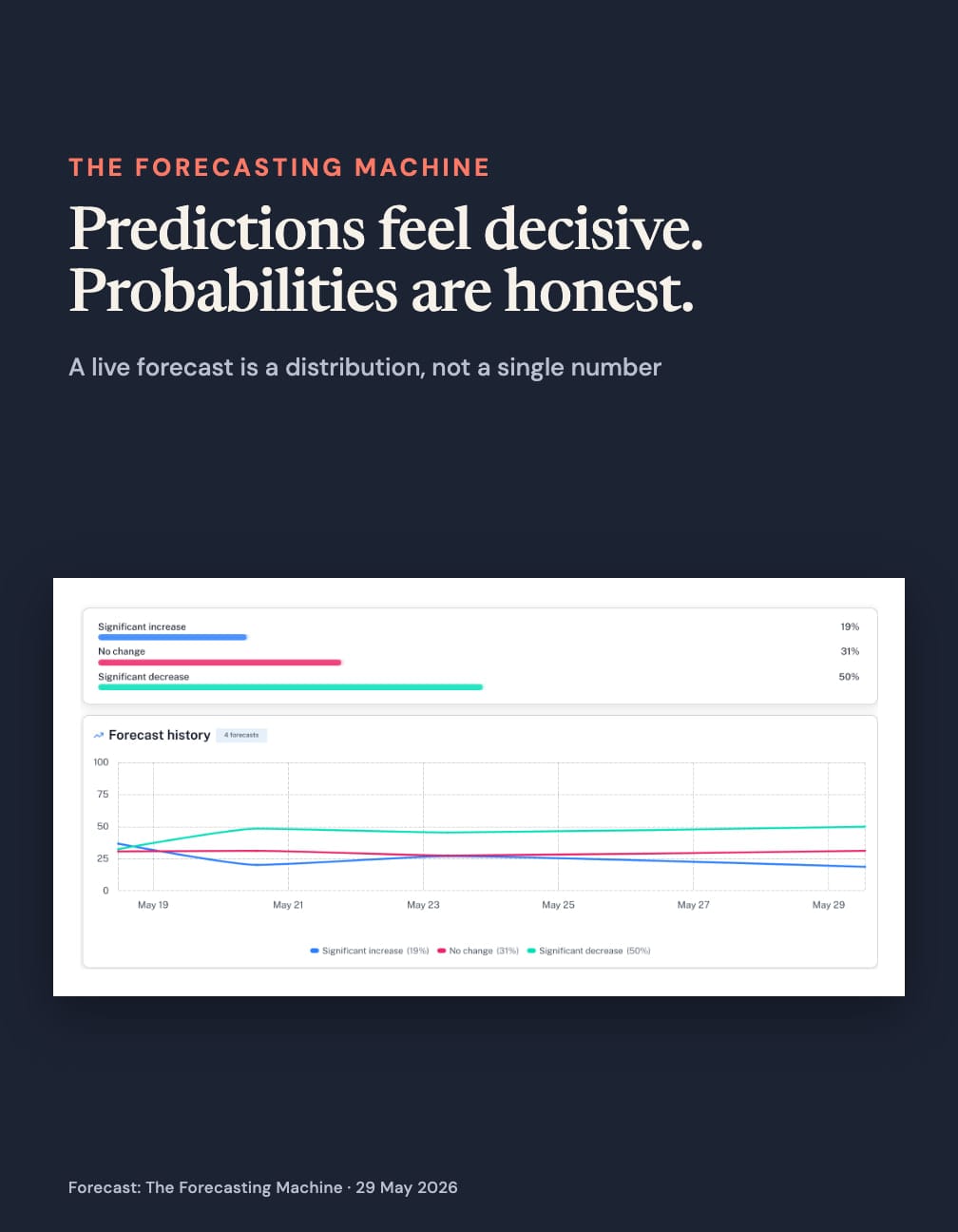
Why Probabilities Beat Predictions

Point predictions feel decisive, but probabilities tell the truth. Here is why we build every forecast as a distribution, not a single number.

2026-04-19The Forecasting Machine

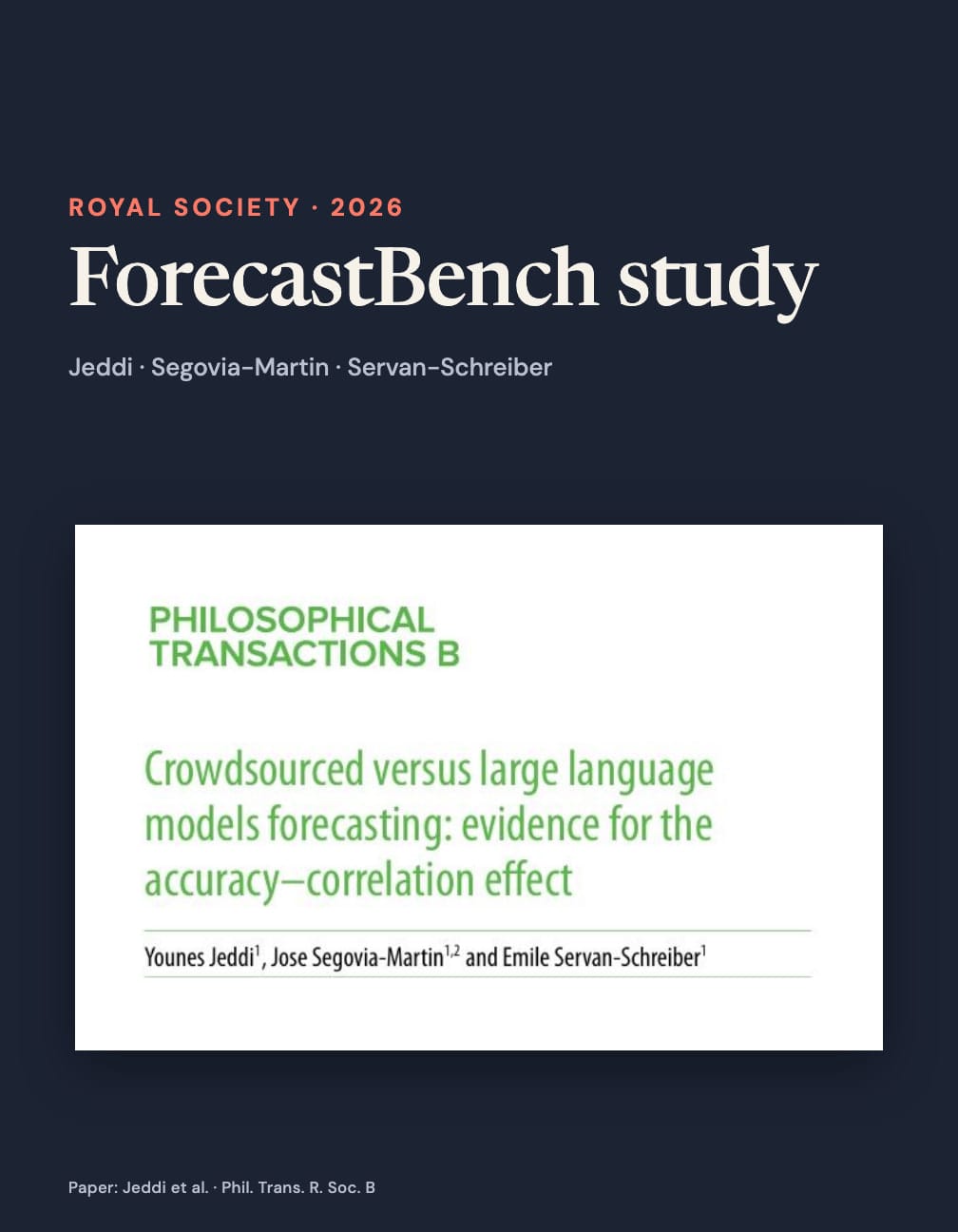
Crowds versus language models: the more accurate the AI forecaster, the more it errs like humans

A Philosophical Transactions B paper co-authored by Émile Servan-Schreiber compares 76 language-model setups with human crowds on 580 ForecastBench questions and finds evidence for the accuracy–correlation effect.
2026-03-25The Forecasting Machine

The Carnegie Mellon mentors behind Émile Servan-Schreiber’s work on intelligence

Three autobiographical posts connect a 1983 encounter, a 1984 AI project and Raj Reddy’s graduate-school advice to a career studying individual and collective minds.

2026-01-22The Forecasting Machine

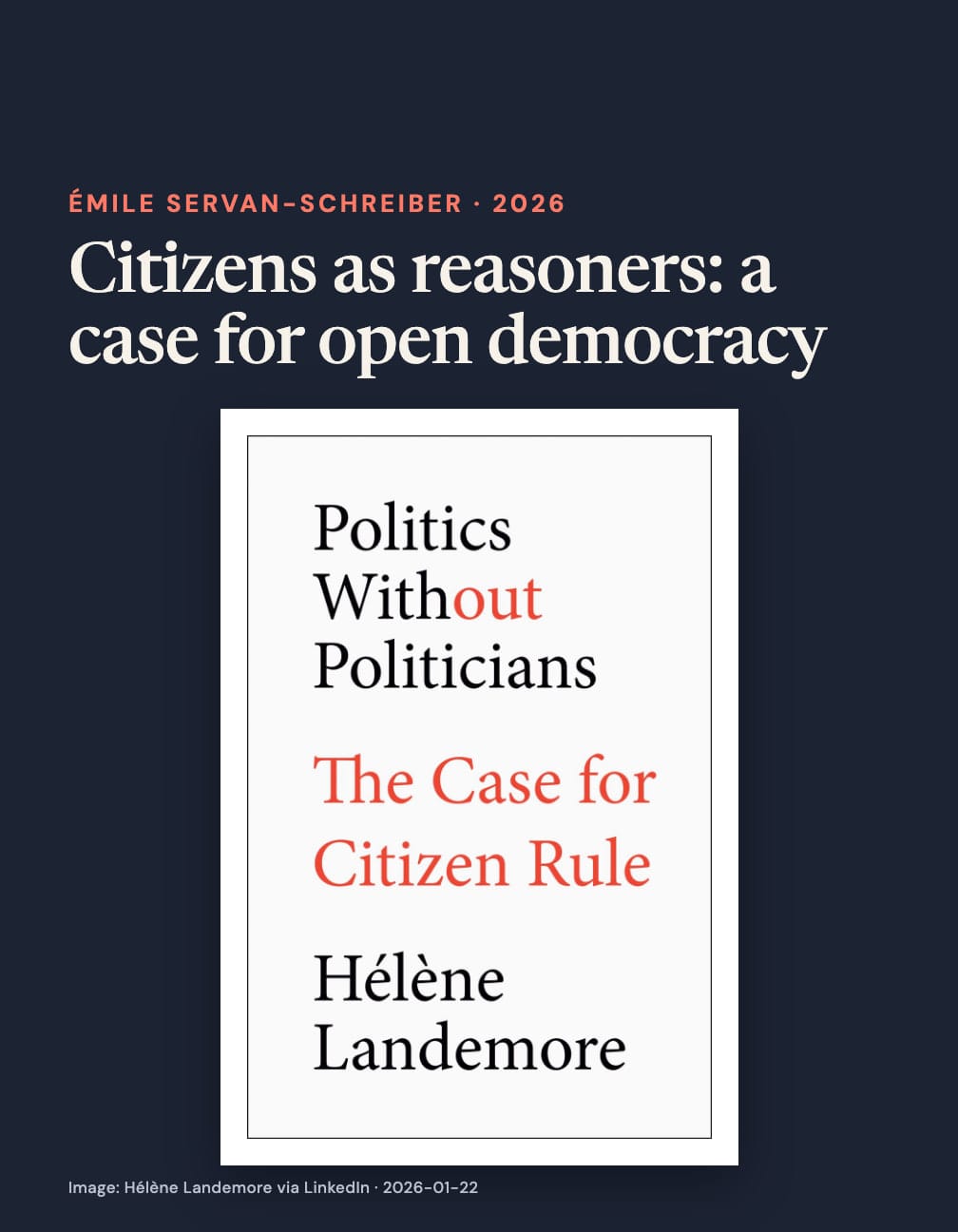
Citizens as reasoners: a case for open democracy

From a 2016 citizen primary to Hélène Landemore’s 2026 book, Émile Servan-Schreiber connects democratic participation with the design of collective reasoning.

2026-01-20The Forecasting Machine

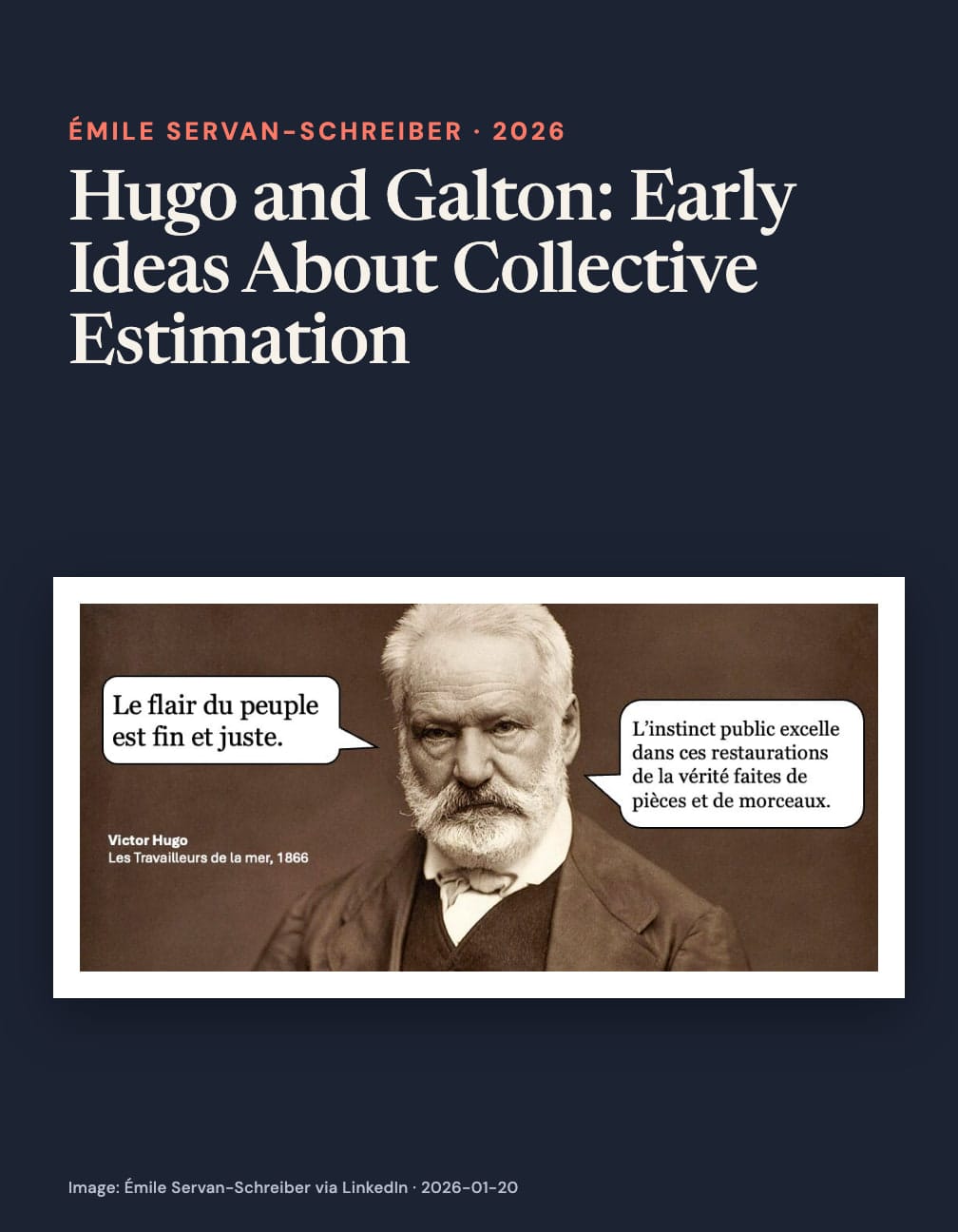
Hugo, Galton and the clues a crowd can put together

Victor Hugo’s prose, Galton’s ox-weight study and a submarine-search account illustrate different ways of assembling scattered information.

2026-01-01The Forecasting Machine

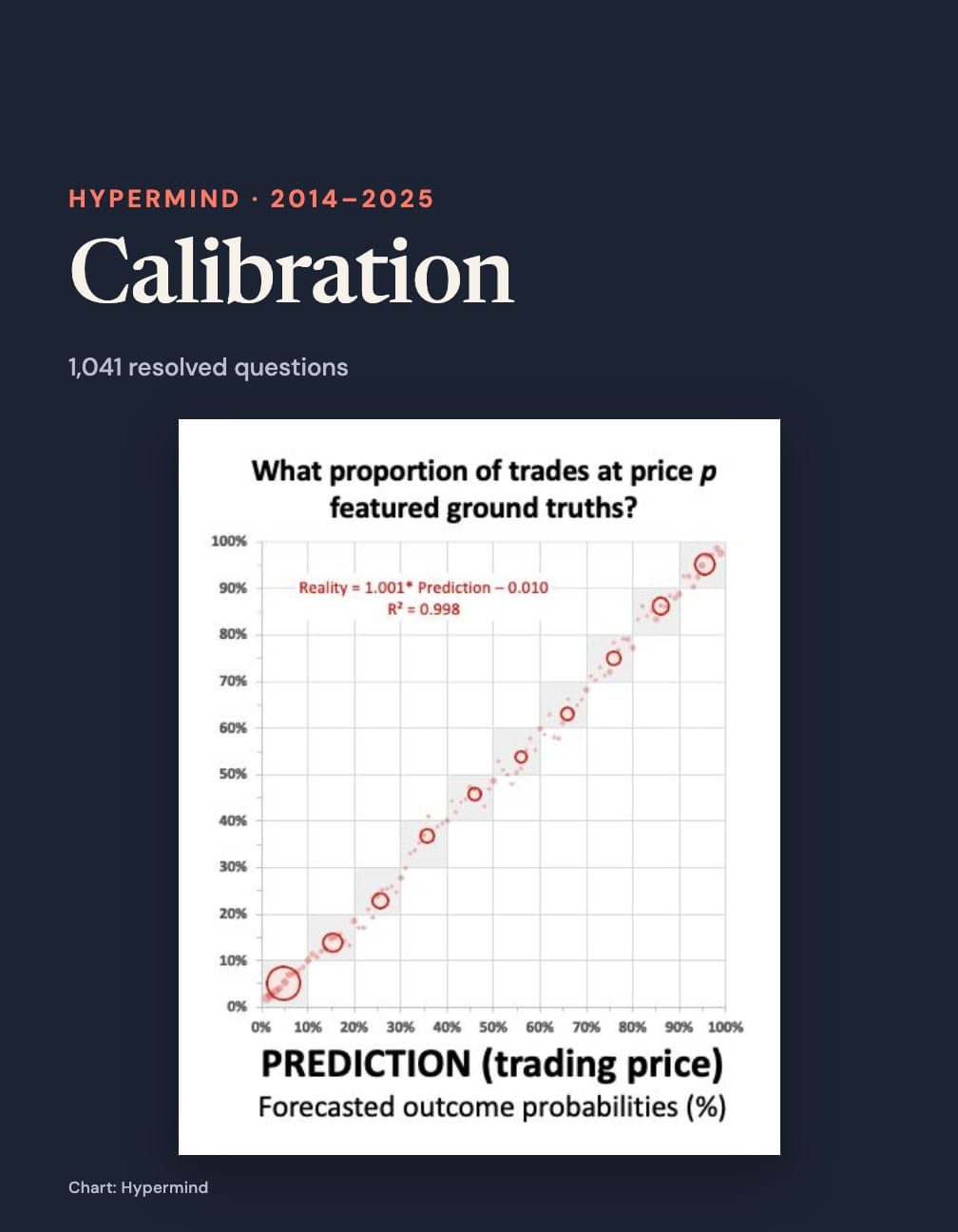
Eleven and a half years of Hypermind forecasts: does a 70% price come true 70% of the time?

Émile Servan-Schreiber recomputed the calibration of the Hypermind prediction market over 1,041 questions resolved from 2014 to the end of 2025. Here is what calibration means and how the result compares with earlier snapshots.


2025-12-21The Forecasting Machine

What Mallat and Guadalupe saw in Supercollectif: ensembles and decisions

At a November 2018 Institut Sapiens presentation, Stéphane Mallat and Maria Guadalupe approached Supercollectif from different disciplines. Their responses shared a concern with how intelligence is organised.

Subscribe to The Forecasting Brief — forecasts & model notes, once a week