News from the frontier of AI forecasting
FORAXION, the company behind The Forecasting Machine, pushes the limits of actionable foresight.
Results for “Émile Servan-Schreiber”
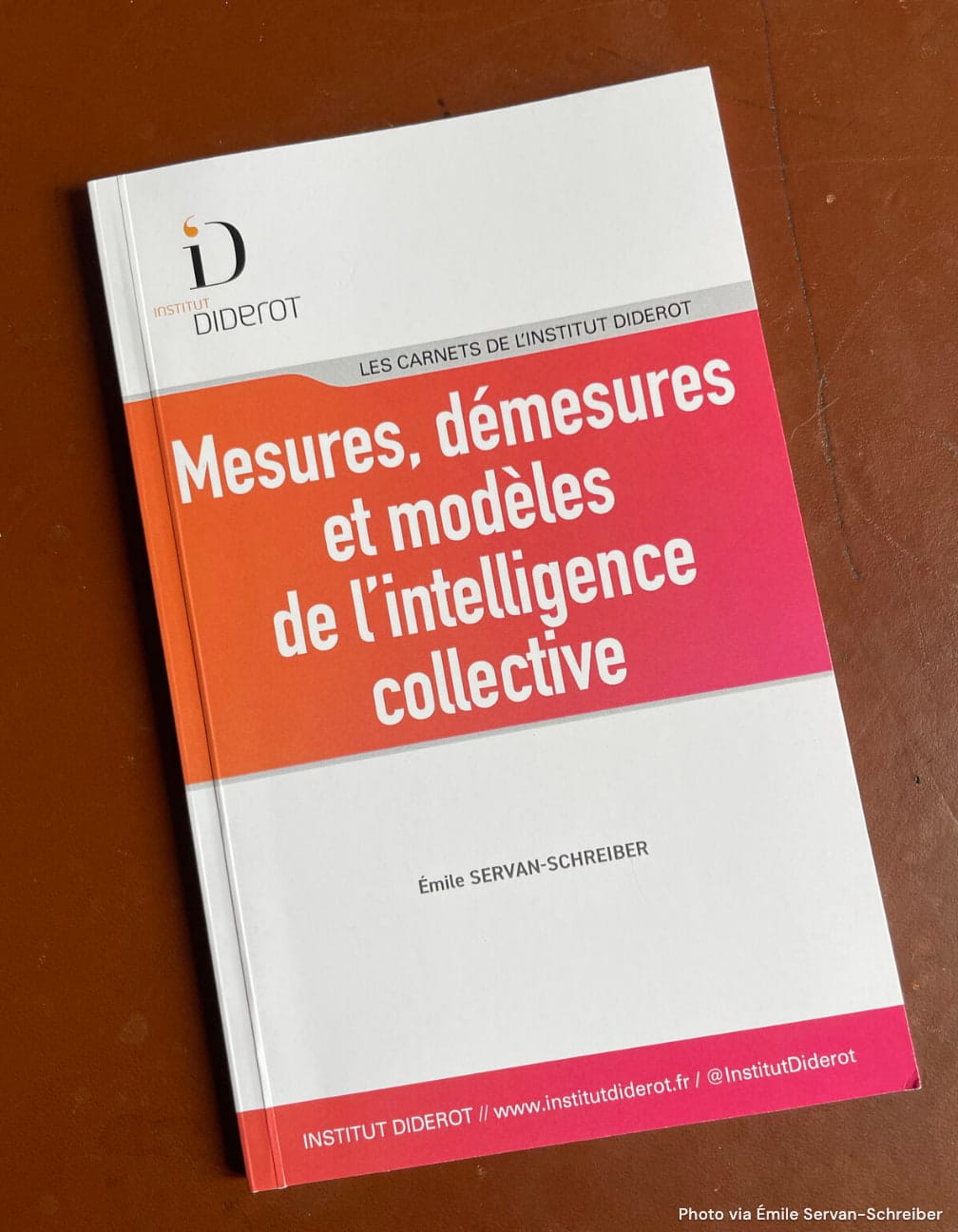
“There Is a Recipe for Collective Intelligence”: Servan-Schreiber’s Institut Diderot Lecture, Now in Print
The Institut Diderot has published the transcript of Émile Servan-Schreiber’s interactive lecture of 5 November 2025 on what makes groups smart, why consensus kills collective intelligence, and why AI still needs diverse human thinking.


Prediction markets can work without money on the line: Servan-Schreiber in Bloomberg Opinion
In a Bloomberg Opinion essay on 8 July 2026, Émile Servan-Schreiber revisited a 2003 wager with Justin Wolfers over French and California wine. The bet became a study showing that play-money and real-money markets forecast American football equally well, and he argued that design, not money, drives accuracy.
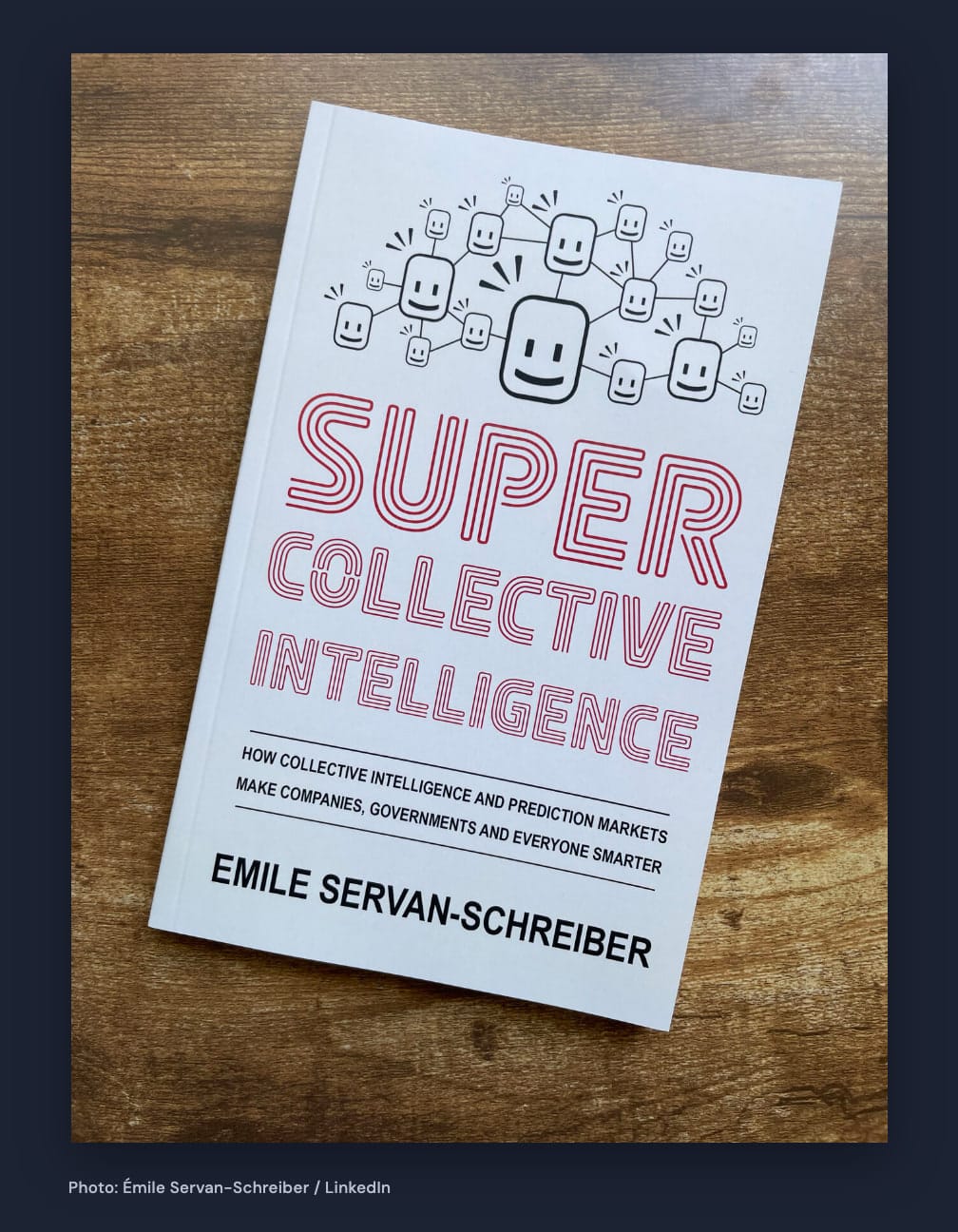
“Supercollective Intelligence”: Servan-Schreiber’s 2018 book on crowds and prediction markets comes out in English
The English edition of Émile Servan-Schreiber’s “Supercollectif” is now on Amazon. He argues that ChatGPT and the rise of Polymarket since 2018 support, rather than overturn, the book’s case.
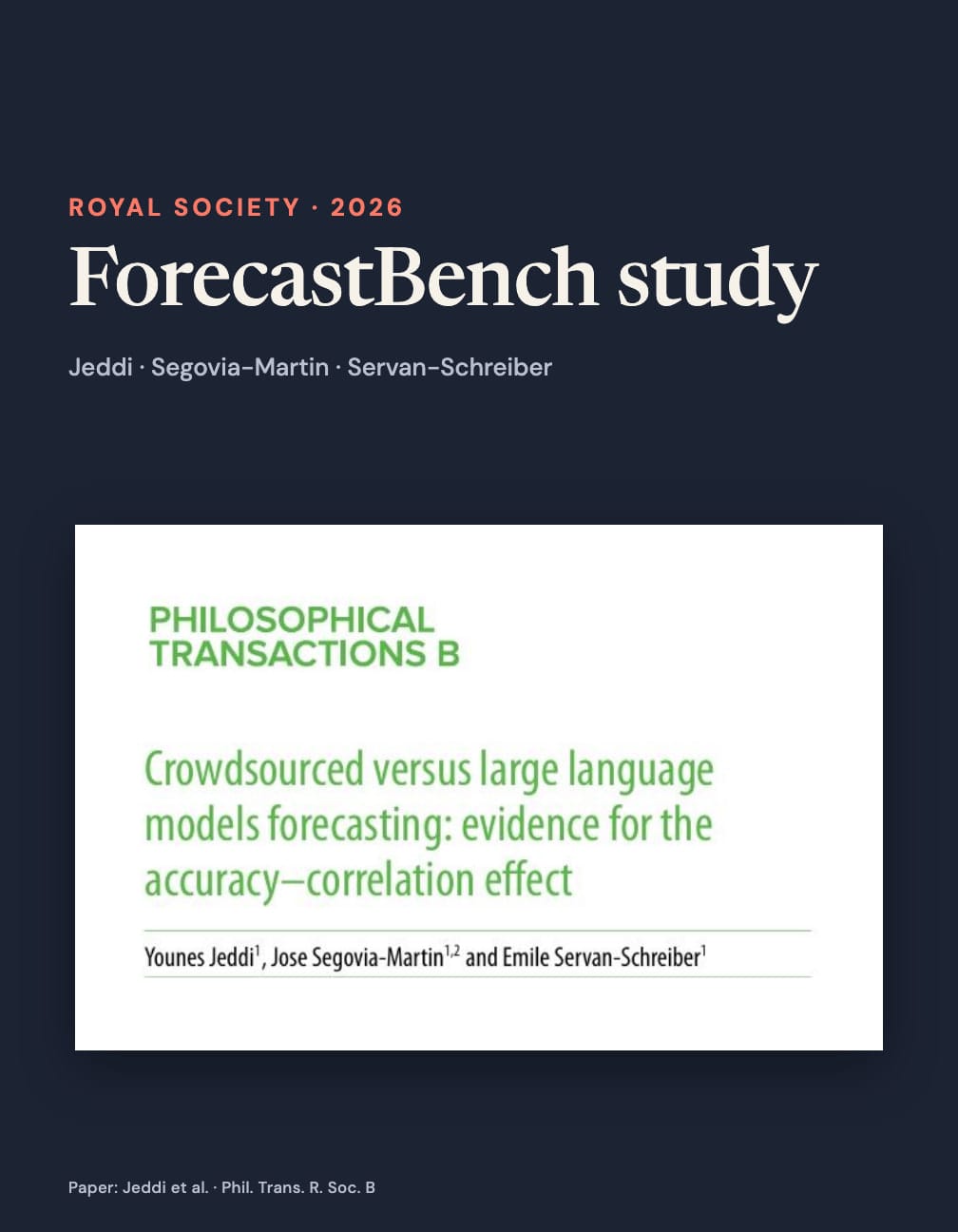
Crowds versus language models: the more accurate the AI forecaster, the more it errs like humans
A Philosophical Transactions B paper co-authored by Émile Servan-Schreiber compares 76 language-model setups with human crowds on 580 ForecastBench questions and finds evidence for the accuracy–correlation effect.

“The readership is an intelligence asset”: Servan-Schreiber in Agenda Pública on crowds, AI and the press
In a March 2026 interview with Agenda Pública, Émile Servan-Schreiber argued that prediction markets beat polls on method, that AI now forecasts as well as a smart crowd, and that newspapers have wasted what their readers know.
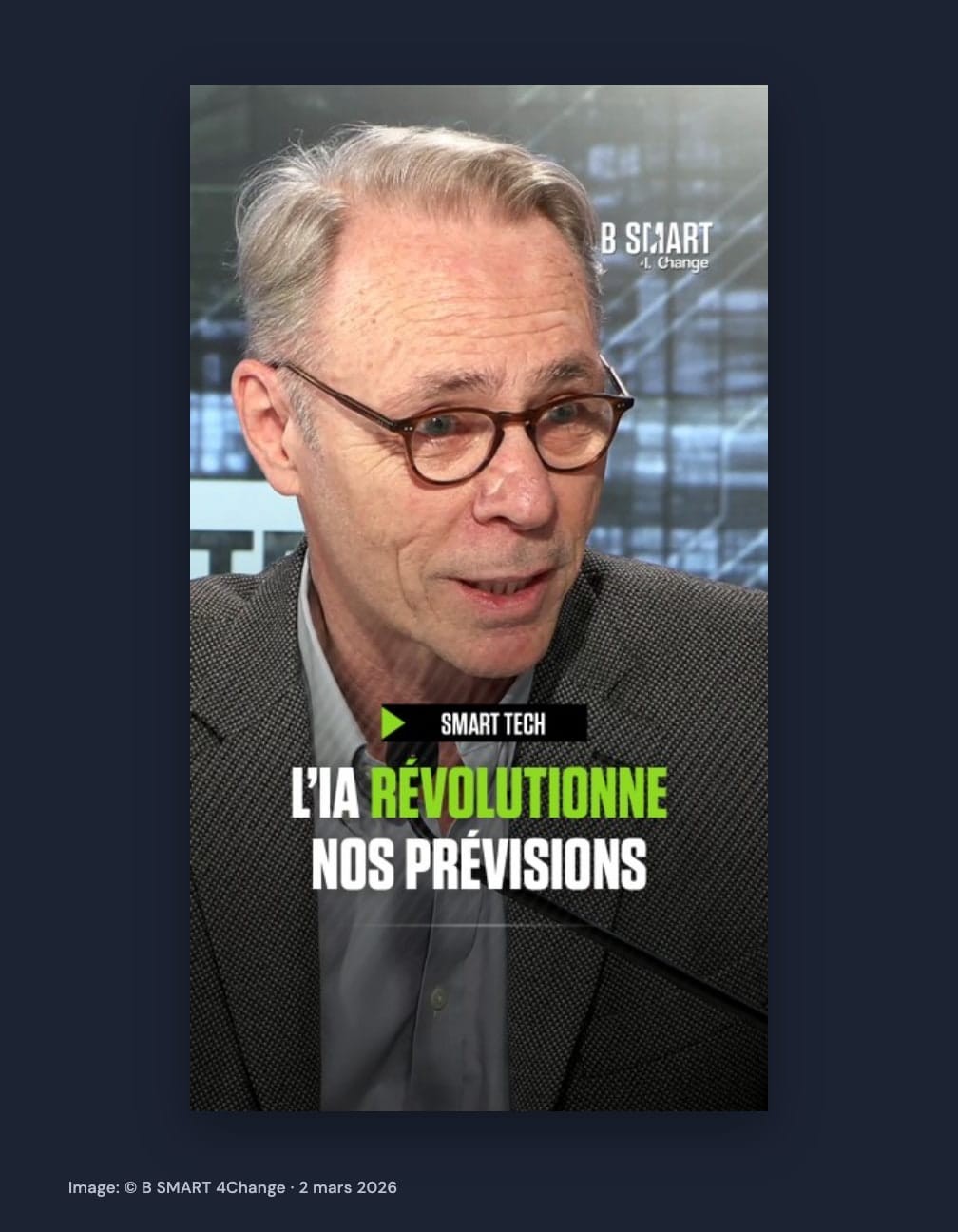
On B SMART, Servan-Schreiber Explains Why a Panel of AI Models Can Forecast Like a Panel of Experts
On B SMART’s Smart Tech on 2 March 2026, Émile Servan-Schreiber told Delphine Sabattier how The Forecasting Machine combines several language models into one sourced forecast, and why he sees those models as collective intelligence in their own right.