
On 11 October 2023, Émile Servan-Schreiber reported bringing EDF’s Parlons Énergies team to meet researchers at the UM6P School of Collective Intelligence in Rabat. By then, he wrote, Hypermind had conducted 30 collective-intelligence projects with the electricity company, using its crowd-storming and crowd-forecasting applications. The count is his dated account of the collaboration.
The exchange connected an internal corporate programme with an academic research community. Philippe Méchet’s accompanying post thanked Lex Paulson and Servan-Schreiber for the invitation and described discussions with researchers and students that he expected would improve practice at EDF.
A programme built around employees
Parlons Énergies predated those visits. EDF’s July 2018 press release describes inviting employees to contribute to the company’s strategic direction, through a digital collective-intelligence platform. In its October 2021 account, the Parlons Énergies team said it had been designing operations inside EDF since 2018 and deploying them with volunteer employees called dialogueurs.
Those volunteers were also the audience for the team’s first summer university. The October recap described a programme built with and for them, combining speakers, methods, tools and training. Servan-Schreiber was listed among the contributors. His own account explained what Hypermind brought: STORM for prioritisation and PRESCIENCE for forecasting.
Prioritising and forecasting are different tasks
The two applications address related but distinct questions. Prioritisation helps a group decide which issues or proposals deserve attention. Forecasting asks what is likely to happen. Servan-Schreiber’s 2021 description names both uses, showing that the collaboration covered more than one form of collective assessment. Hypermind’s company history separately dates the start of its sustained EDF collaboration to 2021.
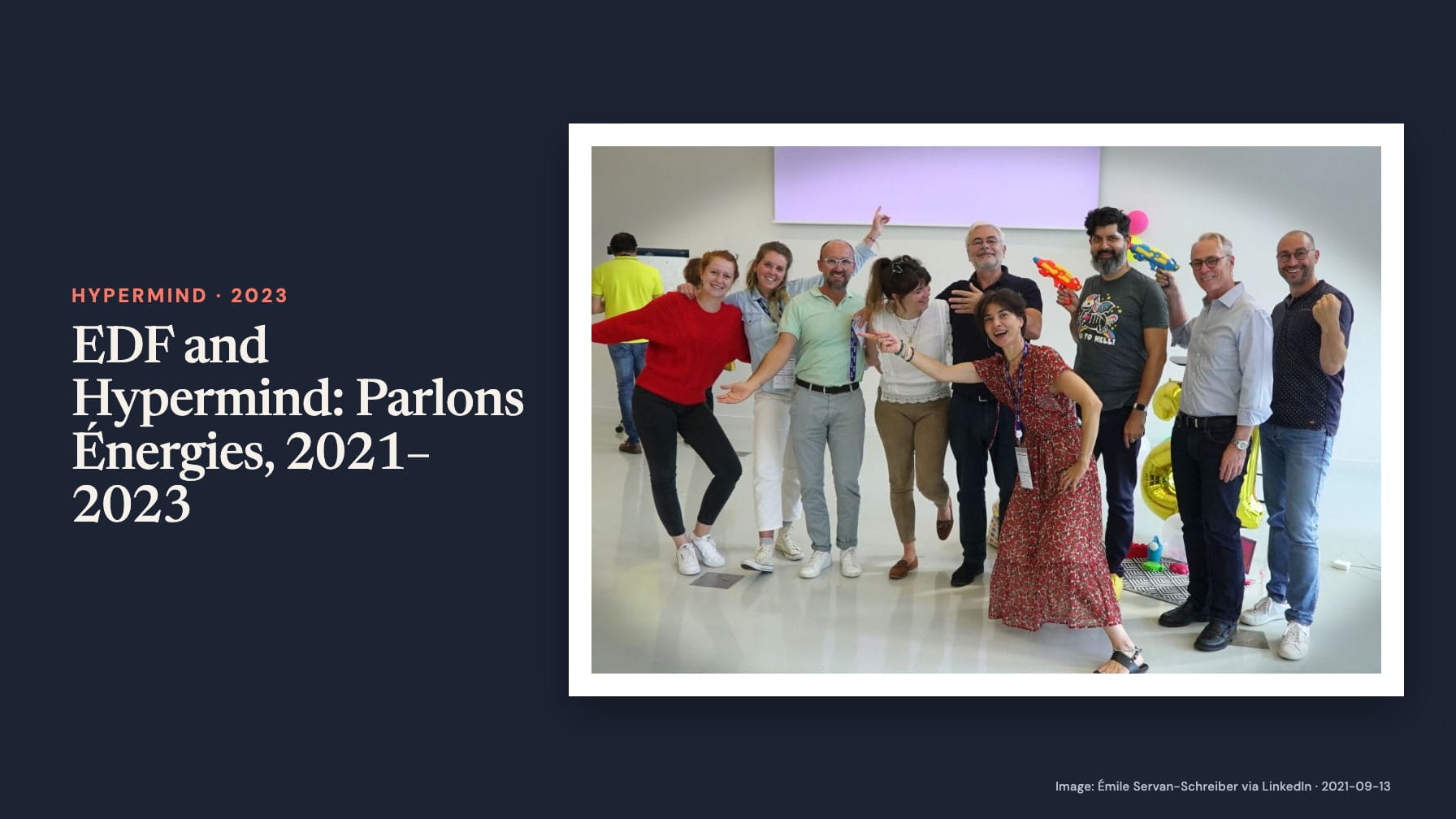
On 13 September 2021, Servan-Schreiber had already posted a group photograph after a lecture on collective forecasts at EDF’s Saclay campus, with an invitation to participate in the prediction market. Together, the Saclay lecture, summer university and Rabat exchange document repeated contact rather than a single announcement.
The journal’s account of lessons from corporate forecasting examines how such tools can support decisions. The EDF collaboration supplies an organisational example: an internal team, employee volunteers and two different kinds of collective task. The Rabat exchange added contact with researchers and students to that operating framework. The reported project count describes the extent of activity; it does not measure the benefit of those projects.