
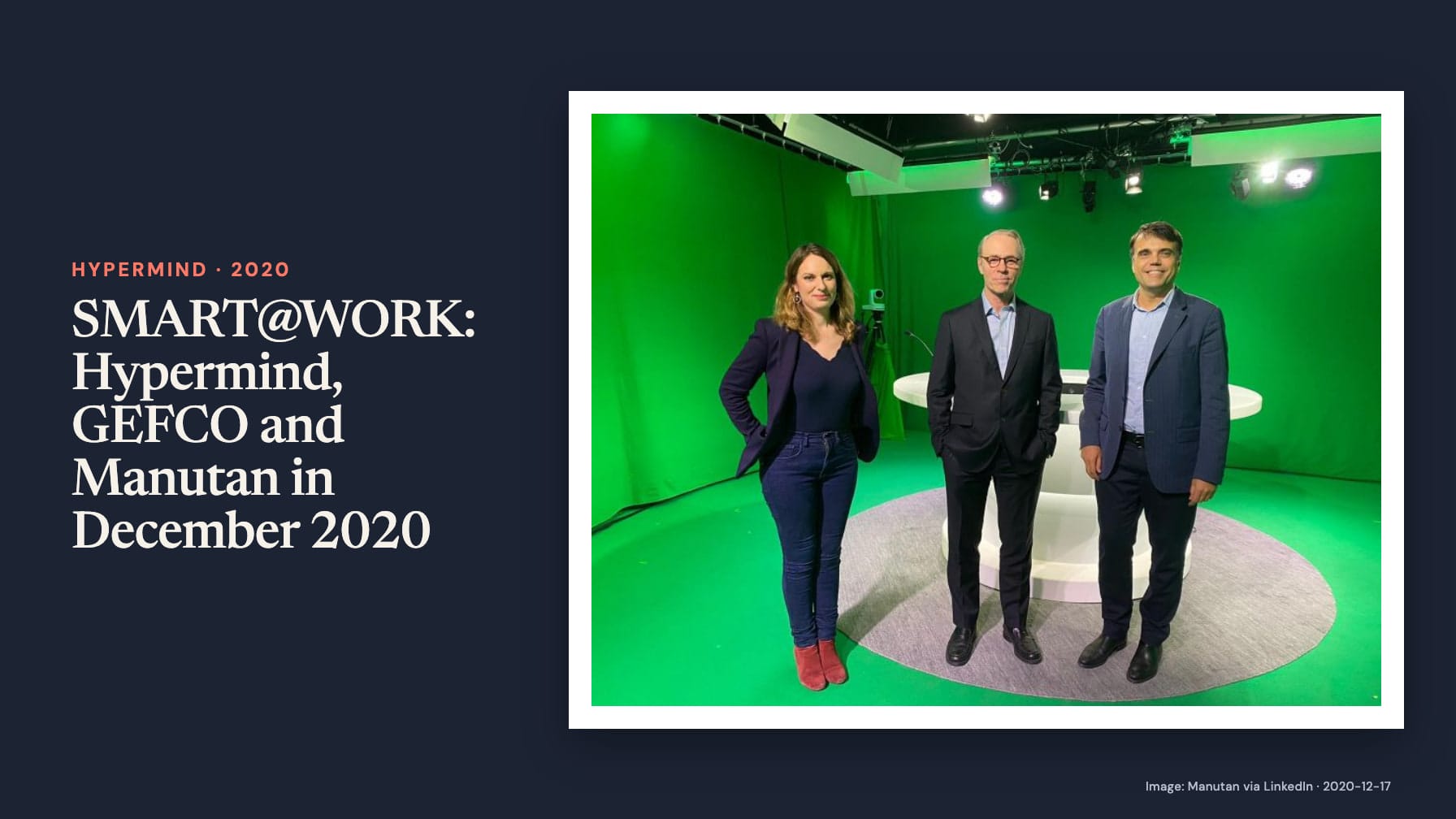
On 19 December 2020, Émile Servan-Schreiber described participating in a B SMART discussion on collective intelligence, hosted by journalist Aurélie Planeix. His fellow guests were Stéphane Milhet of GEFCO and Pierre-Olivier Brial of Manutan. Manutan’s official recap, published on 24 December, identifies it as the eighth SMART@WORK programme and confirms its focus on collective intelligence in business.
Servan-Schreiber’s posts cover the invitation and his response after participation. On 17 December, he shared Manutan’s promotion introducing the panel and advertising the Saturday broadcast. Two days later he thanked the host and praised the other guests. Manutan’s subsequent recap described a discussion that linked freely expressed opinions with rules for making collective work useful.
Freedom of opinion needs organization
Manutan’s account attributes a specific condition to Servan-Schreiber: collective intelligence requires a variety of freely expressed opinions, together with organization and rules. It describes possible outputs including innovations, forecasts, decisions, objectives and ideas. This is a broader conception than a forecasting market, although forecasting sits within it.
The same official source identifies Milhet as GEFCO’s human-resources director and a co-founder of the Innovation Factory, participating remotely. Brial appeared as Manutan’s deputy group chief executive. The discussion therefore brought a forecasting practitioner into conversation with people responsible for corporate leadership and human resources.
A participant’s account of leadership
In the post Servan-Schreiber reshared, Brial said practising collective intelligence had helped him progress and work on his own leadership. His formulation acknowledged that more work remained. That is a useful personal account of changing management practice, rather than a controlled demonstration that a particular method improved a company’s performance.
The central organizational question was how a company can make room for different opinions while retaining a process capable of producing a usable answer. A leader needs to hear information that challenges an initial view, while participants need a clear purpose for contributing. The programme’s emphasis on freedom and rules treats those needs as parts of the same design problem.
This connects to the journal’s coverage of group intelligence and leadership. The December 2020 panel brought that discussion to a workplace audience. Brial’s personal account and Servan-Schreiber’s argument approach it from complementary directions: the habits a manager develops, and the organisation a group needs to turn its different contributions into decisions.